

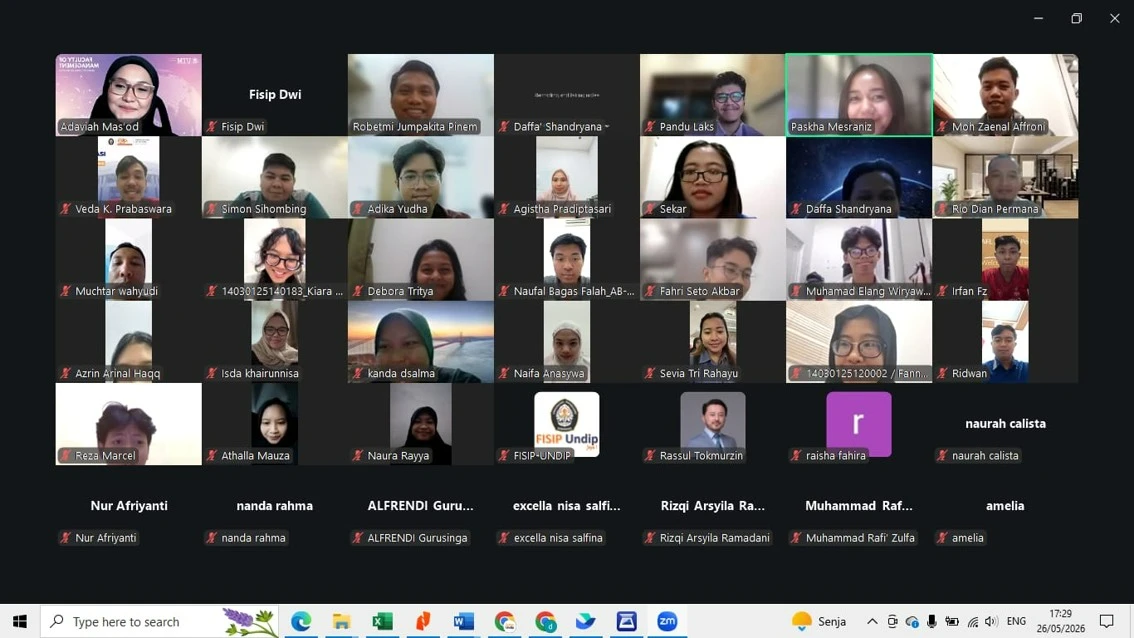
Semarang – The Master of Business Administration (MBA) Program at FISIP, Diponegoro University, once again held the UNDIP Global Classroom activity, discussing the theme “Digital Marketing Analytics and Business Ethics” on Tuesday (26/5/2026), conducted online via Zoom Meeting. This activity featured Dr. Adaviah Mas’od from Universiti Teknologi Malaysia as a speaker and Robetmi Jumpakita Pinem, S.AB, MBA, Ph.D., from Diponegoro University as the discussant, addressing the development of digital marketing in the ASEAN region and the challenges of business ethics in the digital era.
In the presentation, it was explained that the ASEAN region is currently one of the largest centers of digital economic growth in the world. The growth of e-commerce, social media usage, and increasing digital payments have made countries such as Indonesia, Malaysia, Singapore, Thailand, and Vietnam possess enormous digital market potential. Furthermore, consumer behavior in ASEAN is increasingly dominated by the use of smartphones, social commerce, livestream shopping, and influencer influence in purchasing decision-making processes.
The material also discussed the importance of digital marketing analytics in helping companies understand consumer behavior through the collection and analysis of digital data. Data such as website traffic, engagement patterns, purchase history, and consumer search behavior can be used by companies to create more effective and personalized marketing strategies. The use of analytics enables companies to conduct personalized marketing, predictive marketing, customer retention, and increase company revenue growth.
Additionally, the speaker explained how artificial intelligence (AI) and analytics technologies are used in various digital platforms such as TikTok, Shopee, and Grab to provide product recommendations and promotions tailored to user preferences. This strategy is considered capable of increasing consumer engagement while encouraging impulse buying through automated, data-driven recommendation systems.
However, the development of digital marketing also raises various business ethics challenges. This webinar highlighted the dilemma between company profitability and consumer privacy protection. The massive use of consumer data raises questions about the ethical boundaries of marketing personalization and the potential for manipulation of consumer behavior through digital algorithms.
In the session discussing ASEAN case studies, several digital ethics issues were explained, such as the phenomenon of impulse consumption on TikTok Shop, greenwashing practices in sustainability marketing, and the proliferation of fake experts on social media. One example discussed was the policy of the Chinese government, which has begun tightening regulations on influencers and content creators who provide professional information without official qualifications. This step was taken to reduce the spread of misinformation on social media.
The webinar also emphasized that a company’s failure to uphold digital ethics can have a major impact on the business, including loss of consumer trust, damage to company reputation, decreased customer loyalty, and sanctions from regulators. Therefore, digital ethics is seen not only as a moral responsibility but also as an essential part of a company’s long-term business strategy.
In addition to discussing current challenges, the UNDIP Global Classroom activity also highlighted future trends in digital business, such as AI-generated marketing, predictive consumer modeling, ESG integration, ethical AI governance, and transparency-driven branding. In the modern digital era, companies are required to balance technological innovation, data usage, transparency, and consumer trust to maintain sustainable business competitiveness.
Through this activity, MBA students gained insights into the importance of digital marketing analytics, the utilization of artificial intelligence, and the application of business ethics in facing global business dynamics. This understanding is expected to help students become adaptive, innovative business leaders capable of making responsible strategic decisions in the digital economy era.